Lifestyle
DreamMeaniing.com: A Complete Guide to Dream Meanings, Symbols, and Interpretations


Dreams can be mysterious, emotional, vivid, and sometimes difficult to understand. We may wake up remembering a particular person, animal, place, conversation, or unusual event and immediately wonder what it means. This curiosity is one reason dream interpretation remains such a popular subject online.
DreamMeaniing.com is an online resource focused on helping readers explore possible meanings behind dreams. The website presents dream symbolism and interpretations in a straightforward format, allowing visitors to investigate different dream experiences without needing specialized knowledge.
At the same time, we should remember that dreams do not have one universal dictionary in which every symbol has exactly one meaning. The most useful approach is to combine common symbolism with personal emotions, memories, experiences, and circumstances.
What Is DreamMeaniing.com?
DreamMeaniing.com is a website dedicated to dream meanings, dream symbolism, and interpretations of different dream experiences. Its homepage describes the platform as a simple guide offering explanations and symbolism breakdowns for people who want to understand unusual or memorable dreams.
The subject matter can range from ordinary dream symbols to more specific situations. People may search for information after dreaming about falling, flying, water, animals, relationships, money, houses, being chased, losing teeth, or meeting someone from the past.
The value of a dream interpretation website is that it gives us a starting point. Instead of trying to understand an unusual dream completely on our own, we can examine common associations and then compare them with our personal circumstances.
DreamMeaniing.com also uses a simple, accessible approach rather than requiring readers to understand complicated psychological terminology. Its indexed dream-meaning content includes explanations of individual dream themes and symbolic situations.
Why Do We Search for Dream Meanings?
A dream can remain in our thoughts long after we wake up. This is especially true when the dream contains strong emotions, familiar people, frightening situations, unusual locations, or repeated events.
We may search for a dream meaning for several reasons. Sometimes we simply want to satisfy our curiosity. In other situations, a recurring dream may make us wonder whether it connects with something happening in our waking life.
For example, suppose we repeatedly dream about missing a train. Rather than assuming that the train has one fixed symbolic meaning, we can ask what the experience represents personally. Perhaps we have been worried about an important deadline, concerned about missing an opportunity, or feeling pressured by responsibilities.
The same principle applies to almost every dream symbol. Context matters.
A symbol that feels positive to one person may feel frightening to another. Therefore, online dream dictionaries are best used as sources of possible interpretations rather than absolute answers.
Common Dream Symbols and Their Possible Meanings
Dream interpretation frequently discusses a number of recurring symbols. These interpretations should be understood as general associations, not guaranteed explanations.
Falling
Dreams about falling are among the most commonly discussed dream experiences. They may be associated with uncertainty, pressure, vulnerability, change, or a feeling of losing control.
However, the emotional experience matters. Falling while feeling terrified can create a very different interpretation from falling while feeling excited or free.
Flying
Flying dreams can be connected with ideas such as freedom, ambition, confidence, independence, imagination, or escaping limitations. Again, the dreamer’s feelings can change the interpretation considerably.
Water
Water can have many possible associations. Calm water may create feelings of peace, while rough or dangerous water may be connected with fear, uncertainty, or emotional intensity.
We should therefore consider whether the water was clear, dark, deep, calm, turbulent, warm, or frightening.
Being Chased
Being chased in a dream may encourage us to think about something we are avoiding or something that currently creates pressure. The person, animal, or object doing the chasing can also be important.
Rather than assuming that every chasing dream means the same thing, we can ask ourselves: What was I running from, and how did I feel while running?
Teeth Falling Out
Dreams involving teeth are another popular subject in dream interpretation. They are sometimes associated with anxiety, communication, appearance, vulnerability, or personal concerns.
There is no requirement that a teeth-related dream must have one particular explanation. The dreamer’s circumstances provide essential context.
How Emotions Change Dream Interpretation
One of the most important parts of understanding a dream is identifying the emotion experienced during the dream.
Two people can dream about exactly the same object and experience completely different feelings. Consider a dog. One person may associate dogs with loyalty, companionship, and happiness. Another person may associate them with fear because of a negative past experience.
The symbol alone therefore tells us only part of the story.
When interpreting a dream, we can identify emotions such as:
- Fear
- Happiness
- Excitement
- Sadness
- Anger
- Confusion
- Embarrassment
- Relief
- Loneliness
- Confidence
We should then consider why that emotion might feel familiar in our waking life. This approach makes dream interpretation more personal and meaningful than simply searching for a single dictionary definition.
How to Interpret a Dream Step by Step
We can make dream interpretation easier by following a simple process.
1. Write Down the Dream
Dream details can disappear quickly after waking. We should record the main events as soon as possible, including people, locations, objects, conversations, colors, and actions.
2. Identify the Strongest Emotion
Next, we should ask what emotion dominated the dream. Was it fear, excitement, sadness, anger, or something else?
3. Examine the Main Symbols
We can then identify the most noticeable symbols. These might include an animal, house, vehicle, road, body part, person, body of water, or particular object.
4. Consider Recent Experiences
Recent events can provide useful context. A difficult conversation, important decision, stressful deadline, relationship change, or exciting opportunity may influence what occupies our thoughts.
5. Look for Repeated Patterns
A single unusual dream may simply be a memorable experience. Recurring dreams, however, can provide an opportunity to examine repeated emotions, situations, and concerns.
6. Compare Interpretations
Instead of accepting the first explanation we find, we can compare several possible interpretations and determine which ones fit our personal experience.
DreamMeaniing.com and Spiritual Dream Interpretation
Dream interpretation can also include a spiritual perspective. Across different cultures and traditions, people have viewed dreams as meaningful experiences connected with intuition, transformation, guidance, memories, or spiritual beliefs.
Some people are particularly interested in dreams involving deceased relatives, religious imagery, unusual animals, mysterious locations, or powerful symbolic events.
A spiritual interpretation can be meaningful for someone who already follows a particular belief system. However, we should distinguish personal or spiritual interpretation from scientifically established fact.
A dream can be personally meaningful without necessarily being a prediction of the future. Treating symbolism as an opportunity for reflection allows us to explore the experience without assuming that every dream contains a literal message.
How a Dream Journal Can Help
A dream journal is one of the simplest ways to understand recurring dream patterns.
We can keep a notebook or digital document beside the bed and record dreams immediately after waking. Important details include the date, setting, people, symbols, emotions, major events, and ending.
After several weeks, patterns may become easier to recognize.
For example, we might discover that dreams about being late occur mainly during stressful periods. Alternatively, dreams involving childhood places might appear when we are thinking about family, major changes, or past experiences.
The purpose is not to prove that one symbol has a universal meaning. Instead, the journal helps us observe connections between dreams, emotions, memories, and everyday experiences.
Are Dream Interpretations Always Accurate?
We should approach online dream interpretations with reasonable caution. There is no universal system that can assign one scientifically proven meaning to every dream symbol.
Dream interpretation is more useful when treated as reflection rather than prediction.
If a dream is disturbing, repeatedly interrupts sleep, or causes significant daytime distress, an appropriate healthcare professional may be more helpful than relying only on an online dream dictionary.
DreamMeaniing.com can serve as a starting point for exploring possible meanings, but personal circumstances should remain central to the interpretation.
Final Thoughts on DreamMeaniing.com
DreamMeaniing.com provides an accessible way to explore dream meanings, symbolism, and possible interpretations. Its focus on straightforward explanations makes the subject easier to approach for readers who are curious about unusual or recurring dreams.
The most useful way to interpret a dream is to look beyond one isolated symbol. We should consider the entire dream, emotional response, personal associations, recent experiences, and recurring patterns.
A dream dictionary can give us ideas, but it cannot automatically determine what a dream means for every individual. By keeping a dream journal and examining our own experiences, we can develop a more thoughtful understanding of the dreams that stay with us after waking.
FAQs About DreamMeaniing.com
What is DreamMeaniing.com?
DreamMeaniing.com is an online resource focused on dream meanings, symbolism, and dream interpretations. It provides explanations for different dream themes and experiences.
Does every dream have one fixed meaning?
No. A dream symbol can have different associations depending on a person’s memories, emotions, experiences, culture, and circumstances.
What are some common dream symbols?
Commonly discussed symbols include falling, flying, water, animals, houses, vehicles, teeth, money, relationships, and being chased.
Can dreams predict the future?
Dream interpretation should not be treated as a reliable method for predicting specific future events. It is more appropriate to use dream symbolism as a tool for personal reflection.
Why should we keep a dream journal?
A dream journal helps preserve details that may otherwise be forgotten. Over time, it can also make recurring symbols, emotions, and themes easier to recognize.
How should we interpret a confusing dream?
We can begin by recording what happened, identifying the strongest emotion, examining the main symbols, considering recent experiences, and looking for recurring patterns rather than relying on one fixed definition.

Panthro is one of the most recognizable characters in the ThunderCats franchise and has remained an important member of the team across multiple versions of the animated series and related media. Known for his enormous physical strength, engineering ability, martial-arts skills, and distinctive nunchucks, Panthro represents the practical and powerful side of the ThunderCats. While characters such as Lion-O are associated with leadership and Tygra with stealth and intelligence, Panthro is frequently the team’s warrior, mechanic, engineer, pilot, and problem solver.
The character first appeared in the original 1985 ThunderCats animated series, where he was voiced by Earle Hyman. In that continuity, Panthro is a Thunderian and the strongest member of the ThunderCats. He is also responsible for constructing some of the team’s most important vehicles, including the famous ThunderTank. Later versions gave Panthro different backgrounds and personality details, including the 2011 reboot voiced by Kevin Michael Richardson and the comedic ThunderCats Roar version voiced by Chris Jai Alex.
Who Is Panthro in ThunderCats?
Panthro is a fictional Thunderian warrior and engineer who belongs to the ThunderCats. In the original series, he is portrayed as one of the older and more experienced members of the group, with considerable physical strength and extensive technical knowledge. The ThunderCats Encyclopedia identifies him as the team’s chief engineer and explains that he built the ThunderTank and other vehicles used by the heroes.
His character design is based on a panther, which explains both his name and his powerful appearance. Unlike some characters who specialize primarily in one type of combat or ability, Panthro combines physical power with mechanical expertise. He can fight effectively, operate vehicles, repair equipment, and develop technology that helps the entire team.
This combination makes Panthro much more than simply the strongest ThunderCat. He is one of the group’s most important practical resources. When the ThunderCats need a machine built, repaired, modified, or operated, Panthro is often the character who can solve the problem.
Panthro’s Strength, Fighting Skills and Weapons
One of Panthro’s defining characteristics is his exceptional physical strength. The original ThunderCats material identifies him as the strongest ThunderCat, and his muscular build reinforces that role. He is also an experienced martial artist and highly capable close-range fighter.
His signature weapons are a pair of nunchucks, sometimes called fighting sticks. In the original series, the weapons have distinctive red and blue shafts and claw-shaped ends. According to the ThunderCats Encyclopedia, Jaga gave Panthro these weapons aboard the flagship during the escape from Thundera. The weapons can also fire energy pellets and gases, giving Panthro additional options beyond conventional hand-to-hand combat.
Panthro’s equipment also includes the spikes attached to his chest bands. These are not merely decorative elements. They can be used as projectiles or rappelling lines, demonstrating the character’s preference for equipment that has a practical function.
His fighting ability and mechanical knowledge complement each other. Panthro can design technology and then use it effectively in dangerous situations, making him one of the most versatile members of the original ThunderCats team.
Panthro and the ThunderTank
Perhaps Panthro’s most famous creation is the ThunderTank, the heavily armored vehicle associated with the ThunderCats. The character is described as the primary builder of the ThunderTank, with Tygra also helping with vehicle design.
The ThunderTank reflects Panthro’s personality perfectly. It is large, powerful, practical, and designed for difficult situations. Panthro develops a particularly strong attachment to the machine, treating it almost like a member of the team.
His engineering responsibilities extend beyond the ThunderTank. The ThunderCats Encyclopedia also credits him with building or contributing to vehicles including the Feliner, ThunderClaw, ThunderStrike, and HoverCat.
This makes Panthro the technological backbone of the original team. The ThunderCats may possess extraordinary weapons and abilities, but many of their transportation and combat capabilities depend on Panthro’s mechanical expertise.
His engineering role also creates an interesting contrast with his physical personality. Although Panthro is frequently shown as the muscular fighter, he is equally comfortable working with machines and solving technical problems.
Panthro’s Personality and Character Traits
Panthro’s personality combines strength, courage, loyalty, practicality, and humor. He is not usually someone who looks for unnecessary fights, but he does not hesitate when battle becomes unavoidable. The ThunderCats Encyclopedia describes him as aggressive in battle while also emphasizing his kindness and compassion.
He can sometimes be headstrong and quick-tempered, which gives the character flaws that balance his impressive abilities. His confidence and experience can make him skeptical of questionable decisions, but his loyalty to the ThunderCats remains a central part of his character.
One of the most memorable details about Panthro is his fear of bats. This is an intentionally humorous contrast because Panthro is portrayed as the strongest member of the team. A character capable of confronting powerful enemies can nevertheless become frightened by something much smaller and less threatening. The original character material also notes his dislike of spiders.
This vulnerability makes Panthro more entertaining and relatable. His strength does not mean he is completely fearless.
Panthro in the 2011 ThunderCats Series
The 2011 ThunderCats reboot gave Panthro a significantly different backstory. Instead of primarily being introduced as an older mechanic, he is portrayed as a highly experienced soldier and general in the Thunderian Army. He has a close relationship with King Claudus and his former friend Grune.
The reboot explores Panthro’s military history and places greater emphasis on his experience as a warrior. After falling into an abyss during his conflict with Grune, he survives and eventually constructs the ThunderTank, later using it to rescue Lion-O and the other ThunderCats.
This version also gives Panthro one of his most dramatic storylines. During his confrontation with Grune, Panthro loses both arms, after which the Berbils construct mechanical replacements for him. His artificial arms become an important part of his combat identity.
The 2011 version therefore expands the character beyond the original concept, presenting him as a veteran warrior whose engineering skills remain essential to the team.
Panthro in ThunderCats Roar and Modern Merchandise
Panthro also appeared in ThunderCats Roar, the animated series that began in 2020. This interpretation uses a more comedic visual and storytelling style while retaining several fundamental aspects of the character. He remains the team’s technology expert and muscle, and he continues to use his trademark nunchucks.
Panthro’s continued appearance across different ThunderCats adaptations demonstrates how flexible the character is. Writers can emphasize his engineering, strength, military background, humor, or mentorship while retaining the recognizable foundation of the character.
His popularity has also extended into modern collectibles. In 2026, Mattel listed a Masters of the Universe × ThunderCats Panthro action figure, released as part of the crossover between the two iconic 1980s franchises. The figure is listed at a 5.5-inch scale with 16 points of articulation, removable armor, modular parts, and several weapons, including his signature nunchaku along with a mace and axe.
That 2026 release provides another example of how Panthro continues to appear in contemporary pop-culture merchandise decades after his original animated debut.
Frequently Asked Questions About Panthro
Who is Panthro?
Panthro is a Thunderian and member of the ThunderCats, best known for his exceptional strength, martial-arts skills, engineering ability, and role as the team’s mechanic and vehicle builder in the original series.
What is Panthro’s weapon?
Panthro’s signature weapons are a pair of nunchucks or fighting sticks. In the original series, their claw-shaped ends have additional functions beyond ordinary combat.
Who voiced Panthro?
Earle Hyman voiced Panthro in the original 1985 series. Kevin Michael Richardson voiced him in the 2011 reboot, while Chris Jai Alex voiced the character in ThunderCats Roar.
What did Panthro build?
Panthro is credited with building the ThunderTank and contributing to several other ThunderCats vehicles, including the Feliner, ThunderClaw, ThunderStrike, and HoverCat.
What is Panthro afraid of?
One of Panthro’s best-known weaknesses is his fear of bats. The contrast between this phobia and his status as the strongest ThunderCat is used as a recurring humorous element.
Is Panthro in the 2011 ThunderCats series?
Yes. The 2011 version gives Panthro a military background and portrays him as an experienced general and warrior. He is also responsible for constructing the ThunderTank after surviving his encounter with Grune.
Conclusion
Panthro remains one of the defining characters of ThunderCats because he combines qualities that rarely appear together in a single character: enormous physical strength, engineering intelligence, combat experience, loyalty, humor, and occasional vulnerability. In the original 1985 series, he serves as the team’s chief mechanic and strongest warrior, while his construction of the ThunderTank and other vehicles makes him essential to the ThunderCats’ adventures.
Later adaptations have reinterpreted his history without removing these core characteristics. The 2011 series expanded his military background and introduced his mechanical arms, while ThunderCats Roar presented a more comedic version of the familiar character. In 2026, Panthro also remains visible through new merchandise, including Mattel’s Masters of the Universe × ThunderCats crossover figure.
Whether remembered for his nunchucks, ThunderTank, mechanical expertise, strength, or fear of bats, Panthro continues to represent one of the most recognizable elements of the ThunderCats universe.
Lifestyle
Good Morning or Goodmorning: Which Is Correct? Complete Grammar, Spelling, and Usage Guide (2026)
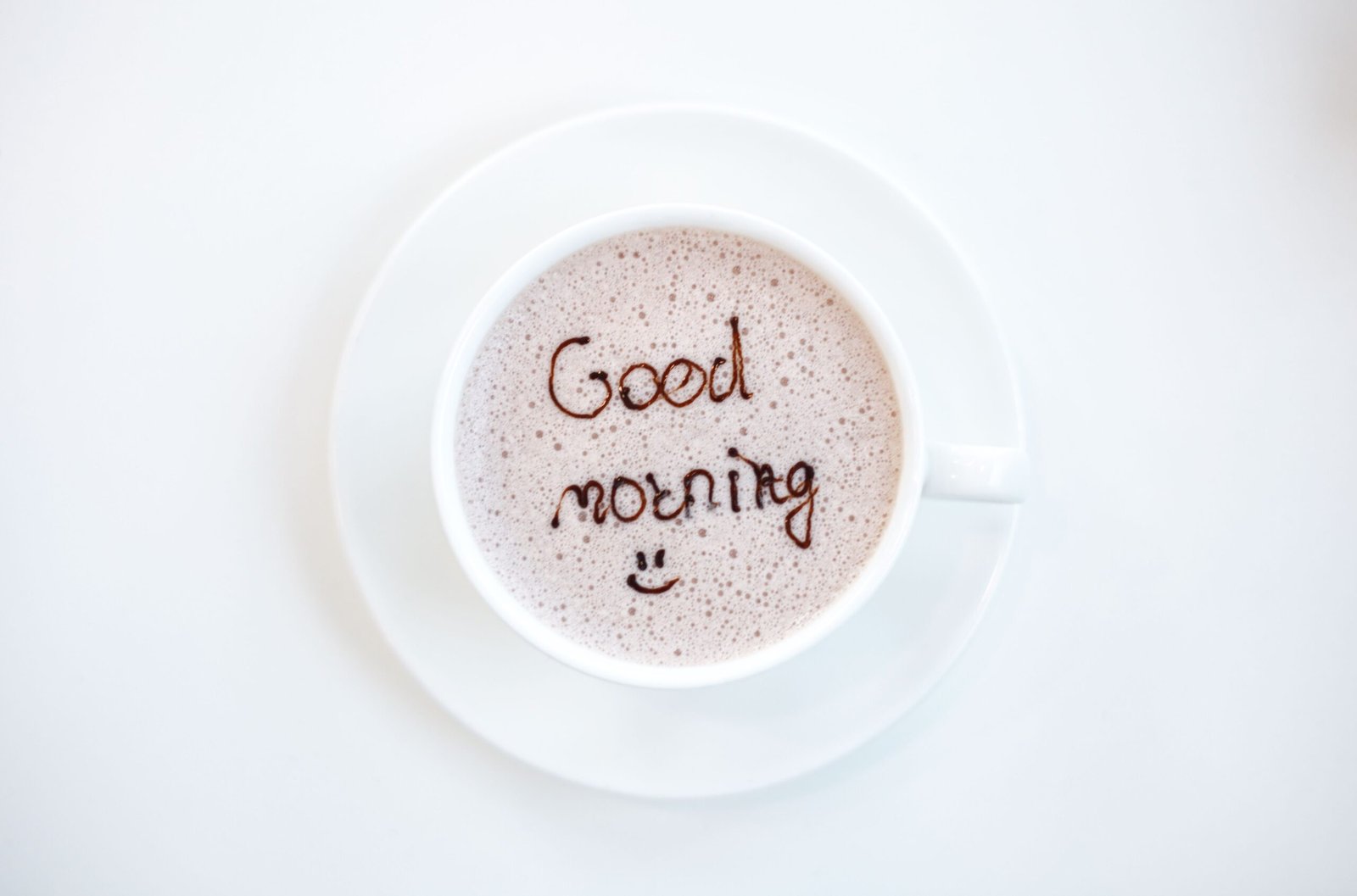
One of the most frequently searched English grammar questions is whether “good morning” should be written as two separate words or as the single word “goodmorning.” While both versions may appear on social media, greeting cards, usernames, or graphic designs, only one is considered correct in standard English.
The correct spelling is “good morning”—written as two separate words. The form “goodmorning” is not recognized as a standard English word and is generally considered a spelling mistake unless it is intentionally used as a brand name, username, website title, or creative design.
Whether you are writing an email, text message, business letter, academic assignment, or social media post, using the correct greeting demonstrates professionalism and good command of English.
In this comprehensive 2026 guide, we explain the difference between Good Morning or Goodmorning, grammar rules, pronunciation, common mistakes, examples, and tips to help you use the greeting correctly in every situation.
What Is the Correct Spelling: Good Morning or Goodmorning?
The correct spelling is:
✅ Good morning
Incorrect in standard English:
❌ Goodmorning
Good morning is a greeting consisting of two separate words:
- Good (an adjective expressing something pleasant or positive)
- Morning (the first part of the day)
Together, they form one of the most common greetings in English.
Examples:
- Good morning, everyone!
- Good morning, Professor Smith.
- Good morning! I hope you’re doing well.
- She smiled and said, “Good morning.”
Although goodmorning may occasionally appear online, dictionaries and standard style guides do not recognize it as the correct spelling for the greeting.
Why “Good Morning” Is Written as Two Words
English contains many greetings made from two separate words rather than one compound word.
Examples include:
- Good afternoon
- Good evening
- Good night
- Good day
Following this pattern, good morning is also written as two words.
The words function together as a greeting but remain separate in standard English writing.
This rule applies across:
- American English
- British English
- Canadian English
- Australian English
- New Zealand English
No major English dictionary lists goodmorning as the standard spelling.
When to Use “Good Morning”
Good morning is appropriate in both formal and informal situations. It is one of the most versatile greetings in the English language.
Business Communication
Examples:
- Good morning, Ms. Johnson.
- Good morning, everyone. Thank you for joining today’s meeting.
- Good morning. Please find the attached report.
Academic Settings
Teachers, students, and professors frequently use:
- Good morning, class.
- Good morning, Professor Williams.
Everyday Conversation
Examples:
- Good morning! How are you today?
- Good morning, neighbor!
- Good morning, Mom.
Emails
Professional email openings often begin with:
- Good morning, David,
- Good morning, team,
- Good morning, everyone,
This greeting is widely accepted in workplaces around the world.
Is “Goodmorning” Ever Correct?
In standard English grammar, goodmorning is not correct.
However, there are a few exceptions where the single-word form may appear intentionally.
Brand Names
Some companies or products may use GoodMorning as part of their branding.
Usernames
Examples:
- GoodMorning2026
- GoodMorningLife
Website Names
Some websites combine words into a single domain name because spaces are not allowed.
Graphic Designs
Designers sometimes merge words for artistic purposes on posters, mugs, T-shirts, or social media graphics.
Even in these cases, the standard English greeting remains good morning.
Common Mistakes to Avoid
Many English learners make similar spelling mistakes when writing greetings.
Mistake 1: Writing One Word
Incorrect:
- Goodmorning everyone!
Correct:
- Good morning, everyone!
Mistake 2: Incorrect Capitalization
Correct capitalization depends on context.
Sentence:
- Good morning, everyone.
Middle of sentence:
- She wished everyone a good morning.
Title:
- Good Morning Messages for Friends
Mistake 3: Missing Commas
When addressing someone directly, include a comma.
Correct:
- Good morning, Sarah.
Incorrect:
- Good morning Sarah.
Using proper punctuation improves clarity and professionalism.
Examples of Good Morning in Everyday English
Business
- Good morning, everyone. Let’s begin today’s meeting.
- Good morning. Thank you for your email.
School
- Good morning, students.
- Good morning, teacher.
Friends
- Good morning! Have a wonderful day.
- Good morning! Ready for breakfast?
Family
- Good morning, Dad.
- Good morning, Grandma.
Customer Service
- Good morning. How may I assist you today?
These examples demonstrate how frequently the greeting appears in both spoken and written English.
Tips to Remember the Correct Spelling
A few simple tricks can help you avoid this common mistake.
Think of Other Greetings
Since we write:
- Good afternoon
- Good evening
- Good night
we also write:
- Good morning
Remember It Is a Phrase
The greeting contains two separate words working together.
Check Your Spellchecker
Modern writing tools usually recognize good morning and flag goodmorning as an error.
Read Professional Emails
Business emails almost always begin with:
- Good morning,
- Good afternoon,
- Good evening,
Following these examples helps reinforce the correct form.
Frequently Asked Questions (FAQs)
Is “good morning” one word or two words?
Good morning is correctly written as two separate words in standard English.
Is “goodmorning” a correct English word?
No. Goodmorning is not recognized as a standard English greeting. It is generally considered a spelling mistake unless used as a brand name, username, or creative title.
Should I capitalize “Good Morning”?
Capitalize Good Morning when it appears in a title or at the beginning of a sentence. In regular sentences, follow normal capitalization rules.
Can I use “Good morning” in professional emails?
Yes. Good morning is one of the most common and appropriate greetings for business emails, meetings, and professional communication.
Is “good morning” formal or informal?
It can be both. It works well in professional settings, classrooms, customer service, and casual conversations with friends and family.
What punctuation should follow “Good morning”?
When greeting someone directly, place a comma after the greeting or after the person’s name, depending on the sentence.
Example:
- Good morning, John.
- Good morning, everyone.
Conclusion
The answer to “good morning or goodmorning” is clear: good morning is the correct spelling in standard English. It is always written as two separate words and is accepted in formal, informal, academic, and professional communication worldwide.
Although goodmorning may appear in usernames, logos, website domains, or creative branding, it is not the correct spelling for everyday writing. By consistently using good morning, along with proper punctuation and capitalization, you can communicate more clearly and professionally in emails, conversations, school assignments, and business documents.
Mastering this simple grammar rule will help ensure your English writing remains polished, accurate, and appropriate in every situation throughout 2026 and beyond.


 Celebrity3 months ago
Who Is Susan Cohan? The Untold Story of Lauren Cohan’s Mother
- Celebrity3 months ago
Who Is Richard Skelton Jr? The Heartbreaking Story of Red Skelton’s Son
- Celebrity3 months ago
Mark Zettel: A Comprehensive Biography, Career Journey, Family Life, and Lasting Legacy
- Tech3 months ago
Get in Touch on TurboGeek.org: The Complete 2026 Guide to Contacting TurboGeek Support, Community, and Editorial Team
- Business3 months ago
IndexSP: .INX – Complete Guide to the S&P 500 Index, Market Performance, and Investment Insights (2026)
- Sports3 months ago
NewsNow Liverpool: Latest Liverpool FC News, Transfers, Fixtures & Live Updates
- Business3 months ago
Travel Tweaks Offers: The Complete 2026 Guide to Smarter Travel Savings and Better Experiences
- Business3 months ago
Latest News MyGreenBucks.net (2026): Complete Guide to Updates, Features, Financial Insights, and What Users Should Know