Celebrity
Caleb James Goddard: Biography, Career, Family, and Life in 2026


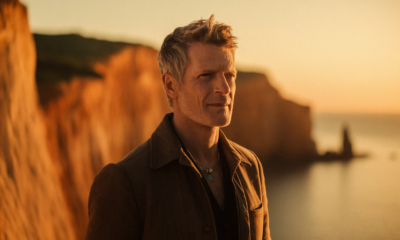
Caleb James Goddard is a relatively private American figure whose name has attracted lasting public interest because of his connection to actress Susan Anspach and the long-running paternity story involving Hollywood actor Jack Nicholson. Born in Los Angeles in 1970, Goddard grew up around the entertainment industry but did not build his adult identity primarily around Hollywood.
Instead, available biographical information describes a career that moved through acting, location management, journalism, international broadcasting, and U.S. diplomatic service. IMDb’s published biography states that Goddard joined the U.S. State Department as a Foreign Service Officer in 2012 and previously worked in broadcasting for organizations including CNN, Yahoo!, and Bloomberg TV. It also lists education at Georgetown University and the London School of Economics.
His family history remains the most frequently discussed part of his biography. Susan Anspach identified Nicholson as Caleb’s father, while Nicholson publicly questioned the paternity for many years. Later accounts reported that Nicholson privately recognized Caleb. Because the public record contains different positions over time, the paternity issue is best presented carefully rather than as an uncontested historical fact.
Who Is Caleb James Goddard?
Caleb James Goddard was born on September 26, 1970, in Los Angeles, California, according to IMDb and several biographical databases. IMDb also lists the alternative professional name Caleb Goddard.
He is the son of actress Susan Anspach, whose career included notable films such as Five Easy Pieces, Play It Again, Sam, and Blume in Love. Anspach worked with Nicholson in Five Easy Pieces, and their relationship became the foundation of the later public discussion surrounding Caleb’s parentage.
Although Caleb’s name is frequently associated with Jack Nicholson, his own life has been substantially quieter than Nicholson’s Hollywood career. He had some early screen credits, but the available record shows that his professional path eventually moved toward journalism, international media, and diplomacy rather than mainstream acting.
That career direction makes Caleb particularly interesting to people researching famous Hollywood families. His biography is not simply the story of a celebrity’s child; it also includes a substantial professional history outside the entertainment industry.
Caleb James Goddard and the Jack Nicholson Paternity Story
The most complicated part of Caleb James Goddard’s biography concerns his reported relationship to Jack Nicholson.
Susan Anspach maintained that Nicholson was Caleb’s biological father. The two actors had worked together on Five Easy Pieces, released in 1970, and Anspach later said that Caleb was conceived during their relationship.
Nicholson’s public position was more complicated. A 1996 Los Angeles Times report reproduced comments from an earlier 1984 Rolling Stone interview in which Nicholson said he was not convinced that Caleb was not his son but also said he had no definitive way to establish the paternity.
The issue remained controversial for decades. In 1994, Anspach wrote to Vanity Fair objecting to an account that referred to another Nicholson son while overlooking Caleb. She identified Caleb as Nicholson’s older son. The Los Angeles Times later reported that Nicholson had never publicly acknowledged being Caleb’s father.
More recent accounts have added another part to the story. PEOPLE reports that Caleb said Nicholson privately recognized him as his son, despite Nicholson’s public position. Modern publications consequently often include Caleb among Nicholson’s children while noting the historical dispute.
The distinction is important: Susan Anspach’s claim, Nicholson’s public statements, and Caleb’s reported account of a private acknowledgment are separate pieces of the historical record. They should not be collapsed into one statement suggesting that the issue was never disputed.
Early Life, Mark Goddard, and the Goddard Family Name
Caleb’s surname is another important part of his story.
Susan Anspach married actor Mark Goddard while she was pregnant with Caleb. According to later reporting, Mark Goddard adopted Caleb, which explains why Caleb grew up with the Goddard surname rather than Nicholson’s name. PEOPLE’s reporting on Nicholson’s children similarly identifies Caleb as having been adopted by Mark Goddard.
The family circumstances meant that Caleb’s upbringing involved several people connected to Hollywood, but he did not publicly build his identity around his alleged biological father’s surname.
Susan Anspach later had another marriage to musician Sherwood Ball. Her children included Caleb and Catherine, and she remained an important figure in Caleb’s life. When Anspach died in 2018 at age 75, the Los Angeles Times reported that her death was announced by her son, Caleb Goddard.
This provides one of the clearer indications of Caleb’s close connection to his mother and also demonstrates that he remained involved with her life while maintaining a relatively private public profile.
Caleb James Goddard Education and Journalism Career
One of the most notable features of Caleb’s biography is his reported transition from a Hollywood-connected childhood into international journalism and media.
IMDb’s published biography states that Caleb graduated from Georgetown University in 1992. It further reports that he earned a master’s degree in International Political Economy from the London School of Economics.
His reported journalism career included work with CNN, Bloomberg TV, and Yahoo! According to the same biographical account, he launched CNN’s Hong Kong Financial News Bureau, served as head of programming for Bloomberg TV Asia, and hosted an early live news broadcast on the internet for Yahoo!.
These reported positions place Caleb’s professional interests far beyond Hollywood. Broadcasting and international journalism would also provide experience with global affairs, financial news, communications, and cross-cultural reporting.
The available public record does not provide a complete résumé with dates for every position, so individual career claims are best attributed to the published biography rather than presented as independently confirmed employment records.
Caleb Goddard and the U.S. State Department
Another major part of the public biography is Caleb’s reported career in U.S. diplomacy.
IMDb states that he joined the U.S. State Department as a Foreign Service Officer in 2012. The biography says his work involved issues including hostage negotiations, elections, Ebola, consular services, and prisoner rights. It also lists assignments at U.S. embassies in Guinea, Thailand, Pakistan, Brussels, and Mauritius.
This reported diplomatic career represents a dramatic shift from the Hollywood environment associated with Caleb’s family. Instead of remaining in entertainment, he developed a professional identity connected to international affairs and government service.
His reported work also helps explain the connection between his education in international political economy and his later professional activities.
Because detailed official personnel records are not broadly available in the sources reviewed, individual assignments and responsibilities should be understood as information reported in his published biography rather than as a complete independently documented government résumé.
Caleb James Goddard Acting Credits and Hollywood Connections
Although Caleb did not become a major Hollywood actor, he did have early entertainment-industry credits.
IMDb lists appearances in Running (1979), The Devil and Max Devlin (1981), and an episode of The Slap Maxwell Story (1988). It also credits him in location management for Guilty as Charged (1991), using the name Caleb James Goddard.
These credits demonstrate that entertainment was part of his early life, but they do not indicate a long-term acting career comparable with those of Susan Anspach or Jack Nicholson.
The contrast is significant. Caleb was born into a family deeply connected with movies and television, yet his adult career reportedly developed through media and international public service.
His early film work can therefore be understood as one chapter of his life rather than the defining feature of his professional identity.
Caleb James Goddard Age, Wife, Children, and Net Worth
According to the reported September 26, 1970 birth date, Caleb James Goddard turned 56 in September 2026. IMDb lists Los Angeles as his birthplace.
His personal life has remained considerably more private than his family connections might suggest. IMDb’s biography identifies his spouse as Karine Pouget, with a marriage date of December 3, 1998, and reports two children. These details come from IMDb’s published mini-biography rather than extensive mainstream reporting.
There is no dependable public figure establishing Caleb James Goddard’s net worth. Online celebrity websites sometimes publish estimated wealth figures, but without reliable financial documentation those numbers should not be treated as established facts.
Likewise, detailed information about his current residence, daily life, personal finances, and children is not extensively documented in authoritative sources. His comparatively private lifestyle makes speculation particularly inappropriate.
Frequently Asked Questions About Caleb James Goddard
Who is Caleb James Goddard?
Caleb James Goddard is an American professional known publicly for his connection to actress Susan Anspach and the long-running paternity story involving Jack Nicholson. His published biography also describes careers in journalism, international media, and U.S. diplomatic service.
When was Caleb James Goddard born?
IMDb lists his birth date as September 26, 1970, in Los Angeles, California.
Who is Caleb James Goddard’s mother?
His mother was actress Susan Anspach, known for films including Five Easy Pieces and Blume in Love.
Is Jack Nicholson Caleb James Goddard’s father?
Susan Anspach identified Nicholson as Caleb’s biological father, while Nicholson publicly disputed or questioned the paternity. Later reporting says Caleb stated that Nicholson privately recognized him as his son. The public record should therefore distinguish between the historical claims and public positions rather than presenting the paternity history as an uncontested fact.
What does Caleb James Goddard do?
IMDb’s published biography reports that he worked in journalism and broadcasting before joining the U.S. State Department as a Foreign Service Officer in 2012.
Did Caleb James Goddard act in movies?
Yes. IMDb lists several early screen credits, including Running, The Devil and Max Devlin, and The Slap Maxwell Story, as well as location-management work on Guilty as Charged.
Conclusion
Caleb James Goddard has a remarkable biography because his life connects Hollywood history with an apparently very different professional path. Born in Los Angeles in 1970, he became publicly associated with actress Susan Anspach and the disputed paternity story involving Jack Nicholson. His surname came through actor Mark Goddard, who adopted him after marrying Anspach.
Beyond his family history, published biographical information describes an individual who moved through early acting and location work, journalism, international broadcasting, and U.S. diplomatic service. His reported education at Georgetown University and the London School of Economics further connects his career to international affairs.
In 2026, Caleb remains considerably less publicly visible than the Hollywood figures associated with his family. That privacy is an important part of understanding his story. The most reliable biography focuses on the documented family history and reported professional career while avoiding unsupported claims about his finances or private circumstances.

Maude Apatow is an American actress, director, and producer best known for playing Lexi Howard in HBO’s popular drama series Euphoria. Born into a family with strong connections to Hollywood, she began acting as a child and gradually established her own identity through film, television, and theater. In 2026, Apatow continues to attract attention for her evolving career, including her work behind the camera and her return to Euphoria for its third season.
This article explores Maude Apatow’s age, family background, acting career, best-known roles, directorial ambitions, and recent projects, offering readers a comprehensive look at her journey in the entertainment industry.
Who Is Maude Apatow?
Maude Apatow, whose full name is Maude Annabelle Apatow, was born on December 15, 1997, in the United States. She grew up in Los Angeles, California, surrounded by the creative environment of the film industry. Her father, Judd Apatow, is a well-known filmmaker, writer, and producer, while her mother, Leslie Mann, is an established actress. Her younger sister, Iris Apatow, has also pursued acting.
Although Maude grew up in a Hollywood family, her career has developed across a range of projects rather than relying on a single type of role. She has appeared in comedies, independent films, television dramas, and stage productions. Her performances often combine understated humor with emotional sensitivity, allowing her to portray characters who observe the world carefully while dealing with complicated personal feelings.
Her early exposure to filmmaking gave her an opportunity to understand how productions work, but building a lasting career required her to develop her own acting style. Her growing list of credits demonstrates an interest in challenging characters and exploring different sides of the entertainment business.
Maude Apatow’s Age, Family, and Early Life
Born on December 15, 1997, Maude Apatow is 28 years old as of October 2026. Her parents’ professional backgrounds introduced her to acting and filmmaking at an early age. However, growing up around the industry did not mean that every part of her career was effortless. Like other performers, she has had to navigate auditions, public attention, professional expectations, and the transition from child actor to adult artist.
Apatow’s family connections are frequently mentioned in profiles about her, particularly because she appeared in films directed by her father and acted alongside her mother. These early experiences helped introduce her to audiences, but her later work in Euphoria became especially important in establishing her independent public identity.
She has also expressed an interest in creative work beyond acting, including directing and theater. This broader perspective is significant because it suggests that her ambitions extend to shaping stories, guiding performances, and contributing to the filmmaking process from different positions.
Maude Apatow’s Acting Career and Early Movies
Maude Apatow began appearing on screen while she was still a child. One of her earliest widely recognized film appearances was in Knocked Up (2007), the comedy directed by Judd Apatow in which she played Sadie, the daughter of Leslie Mann’s character. She later appeared in Funny People (2009) as Mable and returned to the role of Sadie in This Is 40 (2012).
These projects gave audiences an early introduction to her screen presence. They also allowed her to work in ensemble productions featuring experienced performers. As she matured, Apatow moved into projects with different tones and storytelling approaches.
Her later film credits include Other People (2016), The House of Tomorrow (2017), and Assassination Nation (2018). In 2020, she appeared in The King of Staten Island, playing Claire Carlin, and in Netflix’s Hollywood, where she portrayed Henrietta Castello.
These projects helped demonstrate her range beyond family comedies. Rather than remaining associated exclusively with childhood roles, Apatow developed a filmography that includes independent dramas, dark comedy, and character-driven stories. Her choices have contributed to her reputation as a performer interested in exploring different genres.
Maude Apatow as Lexi Howard in Euphoria
One of the most significant roles in Maude Apatow’s career is Lexi Howard in Euphoria. The HBO drama, which premiered in 2019, follows a group of teenagers and young adults as they deal with relationships, identity, addiction, grief, and the pressures of growing up. The series features an ensemble cast led by Zendaya.
Lexi is often portrayed as thoughtful, observant, and comparatively reserved. While she sometimes feels overlooked by people around her, she pays close attention to their behavior and relationships. Her perspective becomes especially important during the show’s second season, when a school play she creates brings private conflicts and complicated friendships into public view.
Apatow’s performance gives Lexi a distinct personality. Instead of relying on dramatic outbursts, she often communicates through quiet reactions, awkward humor, and moments of vulnerability. This approach makes the character relatable to viewers who understand what it feels like to watch events unfold without always knowing how to participate.
In 2026, Euphoria returned for its third season, continuing the story after a significant time jump. Lexi’s evolving creative ambitions remain connected to the character’s earlier interest in writing and storytelling. Apatow’s work on the series has helped introduce her to a much wider audience and remains a defining part of her public profile.
Other Projects, Theater, and Directorial Work
Beyond Euphoria, Apatow has continued to expand her career. Her more recent screen credits include One of Them Days (2025), in which she played Bethany, and the holiday film Oh. What. Fun. (2025), in which she portrayed Mae-bell. She has also contributed voice work to the animated science-fiction series Pantheon, playing Justine.
Theater has provided another avenue for her creative development. In 2023, she played Audrey in the stage production of Little Shop of Horrors in New York. She also made her West End debut as Sally Bowles in Cabaret in London. Stage acting requires performers to sustain a character and deliver each performance live, offering a different experience from working on a film or television set.
A particularly important step in Apatow’s career has been her move into directing. Her film Poetic License marks a significant expansion of her work beyond acting, with Apatow taking on directing and production responsibilities. The project reflects her interest in character-driven storytelling and the creative decisions involved in bringing a film to life.
Moving behind the camera can give an actor a deeper understanding of performances, editing, pacing, and collaboration. For Apatow, directing represents an opportunity to develop her own perspective as a filmmaker rather than limiting her contribution to the roles she plays.
Maude Apatow’s Personal Life, Public Image, and Future
Maude Apatow generally keeps much of her private life separate from her professional work. Public interest often focuses on her family, fashion, friendships, relationships, and appearances at entertainment events. However, personal details should be distinguished from confirmed professional information, especially when online speculation circulates without reliable evidence.
Her public image combines a connection to Hollywood tradition with a growing independent creative identity. She has appeared in fashion and beauty features, spoken about her artistic development, and continued exploring opportunities across acting, directing, and theater. These interests show how her career is developing beyond the role that first made her widely recognizable.
Looking ahead, Apatow’s experience in television, independent films, and stage productions gives her several possible directions. She may continue pursuing dramatic roles, explore more comedy, or develop additional projects as a director and producer. While future casting announcements and release schedules can change, her work in Euphoria and her move into filmmaking make her an artist worth following.
Conclusion
Maude Apatow has developed from a child performer in family comedies into a versatile actress and emerging filmmaker. Her early appearances in Knocked Up, Funny People, and This Is 40 introduced her to audiences, while her portrayal of Lexi Howard in Euphoria became a major milestone in her career. Her film work, theater performances, and directorial ambitions demonstrate a willingness to explore different creative roles.
In 2026, Apatow’s career reflects continued growth rather than a single defining achievement. As she expands her experience behind the camera and takes on new acting opportunities, her future projects may reveal even more about her interests as a storyteller.

Tommy Detamore was an acclaimed American pedal steel guitarist, music producer, recording engineer, and multi-instrumentalist whose work helped shape the sound of Texas country music and Americana. Although he often worked behind the scenes rather than seeking celebrity, his playing and production skills contributed to hundreds of recordings over a career spanning more than four decades. He owned Cherry Ridge Studio in Floresville, Texas, where established performers and emerging artists came to record music. Detamore died on August 5, 2026, at the age of 70, leaving behind a lasting musical legacy.
For readers searching for Tommy Detamore’s biography, career highlights, albums, awards, or contribution to country music, his story demonstrates how a skilled musician can influence an entire genre without always standing at the front of the stage.
Who Was Tommy Detamore?
Tommy Detamore was born on September 8, 1955, in Charlottesville, Virginia. He developed an interest in music early in life, playing guitar in local bands during high school and college. His musical journey later led him to the pedal steel guitar, an instrument known for its expressive sliding tones and its important role in traditional country music. In 1976, he began studying the instrument with Buddy Charleton, a respected steel guitarist associated with Ernest Tubb’s Texas Troubadours. This training helped him develop the technique and musical sensitivity that became central to his professional career.
Detamore also pursued formal education. His biography notes that he graduated from Albemarle High School with honors, attended Virginia Polytechnic Institute and State University, and earned a degree in education from Piedmont Virginia Community College in 1978. While his career ultimately centered on music, his education reflected a broader set of interests and abilities. His later achievements combined musical creativity with technical knowledge, patience, and a disciplined approach to recording.
How Tommy Detamore Built His Country Music Career
In 1981, Detamore moved to Texas to play steel guitar with country singer Darrell McCall. The following year, he joined Moe Bandy’s band, becoming part of a touring act that performed widely across the United States and internationally. During this period, Detamore appeared with the band on major country music platforms and television programs, including the Grand Ole Opry, Hee Haw, and Nashville Now. These experiences gave him valuable stage experience while strengthening his reputation among country musicians.
Touring with established performers also helped Detamore understand the relationship between live performance and studio recording. The pedal steel guitar can provide a song with a gentle melodic response, a mournful atmosphere, or a bright, rhythmic flourish. Detamore’s ability to adapt his playing to different singers and arrangements made him a valuable collaborator. Rather than relying on one recognizable style, he focused on serving the song, allowing the vocals and the overall arrangement to remain at the center.
Cherry Ridge Studio and His Work as a Producer
One of the most important milestones in Detamore’s career came in 1991, when he opened Cherry Ridge Studio in Floresville, Texas. The studio became a respected recording destination for musicians working in country, Texas music, and Americana. It gave Detamore a place to bring together his skills as an instrumentalist, producer, engineer, mixer, and mastering specialist. His work behind the recording console was just as significant as his performances with a guitar.
According to his professional biography, Detamore engineered, produced, and mastered more than 150 albums and played instruments on well over 300 recording projects. His musical abilities extended beyond pedal steel to acoustic and electric guitar, dobro, mandolin, and other instruments. This range allowed him to contribute to recordings in several ways, from adding a distinctive instrumental line to shaping the final sound of an entire album.
A successful recording depends on more than the performance itself. Producers and engineers must understand timing, tone, arrangement, microphone placement, mixing, and mastering. Detamore brought these technical and creative responsibilities together, helping artists turn musical ideas into finished recordings. His long-running studio career illustrates why experienced behind-the-scenes professionals are so important to the music industry.
Famous Artists, Albums, and Recording Credits
Tommy Detamore worked with a wide range of performers, including Ray Price, Johnny Bush, Moe Bandy, Doug Sahm, Jim Lauderdale, Ronnie Milsap, The Texas Tornados, Robert Earl Keen, Sunny Sweeney, and Micky Dolenz. These collaborations connected him with different generations and styles of American music. His credits reflect a career that crossed the boundaries between traditional country, honky-tonk, western swing, and Americana.
Several projects help illustrate his impact. Detamore worked on Doug Sahm’s The Return of Wayne Douglas, and his production and engineering credits included albums by artists such as James Talley and Dallas Wayne. He also contributed to recordings by Sunny Sweeney and Jim Lauderdale. In 2025, he worked as an engineer, producer, mixer, and mastering engineer on Ty Myers’ album The Select, demonstrating that his studio work remained relevant to newer artists late in his career.
Another notable credit was Bill Kirchen’s instrumental “Poultry in Motion,” which received a 2001 Grammy nomination for Best Country Instrumental. Detamore’s role in engineering the recording formed an important part of his professional résumé. While a Grammy nomination is not the same as winning an award, it reflects the level of recognition associated with the project. His broader discography shows how technical expertise and musical performance can work together to support a successful recording.
Awards, Recognition, and Musical Influence
Detamore received recognition for both his production work and his musicianship. In 2008, the Academy of Western Artists named him Record Producer of the Year. He was also inducted into the Steel Guitar Hall of Fame, an honor reflecting his contribution to an instrument closely associated with traditional country music. In 2026, the Cowtown Society of Western Music honored him with a Hero of Western Swing award shortly before his death.
His influence was not limited to trophies or formal honors. For singers and musicians, a dependable studio collaborator can make a major difference to the quality of a recording. Detamore earned a reputation for understanding what a song needed and for using his technical skills to help artists achieve their musical goals. His work demonstrates that a lasting contribution to music can come from supporting other performers, not simply from releasing records under one’s own name.
His career also highlights the enduring place of the pedal steel guitar in country music. The instrument can create a smooth, vocal-like sound that complements lyrics about love, loss, memory, and everyday life. Detamore’s ability to use it within different arrangements helped preserve traditional country sounds while allowing them to appear in newer recordings.
Tommy Detamore’s Death and Lasting Legacy
Tommy Detamore died on August 5, 2026, aged 70, according to published tributes and music-industry reports. His death was a loss for the Texas country and Americana communities, where he had spent decades performing, producing, recording, and helping other musicians develop their work.
Detamore was also involved in church music in Texas, serving as a musician and contributing to church sound and music programs. Reports about his life describe his faith as an important part of his personal identity. This side of his story offers a fuller picture of a man whose work extended beyond commercial recording studios and concert stages.
His legacy lives on through the recordings he helped create, the artists he supported, and the musicians who can study his extensive body of work. Listeners may not always recognize his name when they hear a country song, but his playing and production helped shape the finished sound. In that sense, Tommy Detamore’s influence continues wherever his recordings are heard.
Frequently Asked Questions About Tommy Detamore
Who was Tommy Detamore?
Tommy Detamore was an American pedal steel guitarist, multi-instrumentalist, producer, and recording engineer known for his work in country music and Americana.
When did Tommy Detamore die?
He died on August 5, 2026, at age 70.
What was Cherry Ridge Studio?
Cherry Ridge Studio was Detamore’s recording studio in Floresville, Texas. He opened it in 1991, and it became an important base for his recording, production, mixing, and mastering work.
Which famous musicians did he work with?
His credits include work with Ray Price, Moe Bandy, Johnny Bush, Doug Sahm, Jim Lauderdale, Ronnie Milsap, Sunny Sweeney, and other country and Americana performers.
Did Tommy Detamore receive any major awards?
Yes. He was named Record Producer of the Year by the Academy of Western Artists in 2008, was inducted into the Steel Guitar Hall of Fame, and received a Hero of Western Swing honor in 2026.
Conclusion
Tommy Detamore biography is the story of a musician who built an extraordinary career through skill, collaboration, and dedication. From his early interest in guitar in Virginia to his years touring with Moe Bandy and his decades running Cherry Ridge Studio in Texas, he made meaningful contributions to country music both onstage and behind the scenes. His work on hundreds of recordings, his Grammy-nominated engineering credit, and the respect he earned from fellow musicians all reflect the breadth of his achievements.
Although Detamore passed away in 2026, his musical legacy remains present in the songs he helped shape. His career is a reminder that some of music’s most influential figures are not always the most visible ones: their lasting impact can be heard in the recordings, performances, and artists they helped bring to life.

Kohen Wiley, also identified in public records as Kohen Kartier Wiley, was a one-year-old child from Mississippi whose death in June 2026 drew national attention and prompted demands for transparency and accountability. His case became a subject of public discussion after he was fatally shot during a police encounter outside a Walmart in Senatobia, Mississippi. The incident raised difficult questions about the use of force, the treatment of families during law-enforcement encounters, and the importance of independent investigations.
This article summarizes what has been reported about Kohen Wiley, explains the circumstances surrounding the incident, and examines the community response and subsequent developments. Because the investigation has been a source of dispute, it is important to distinguish official statements from the family’s account and from allegations that have not been conclusively established.
Who Was Kohen Wiley?
Kohen Kartier Wiley was a young child from the Senatobia area of northern Mississippi. Public obituary records list his birth year as 2024 and his death on June 14, 2026, at one year old. His death was a profound loss for his family and prompted expressions of sympathy from community members and people following the case.
Unlike a public figure whose life is documented through a long career, Kohen was a child whose name became widely known because of a tragic event. Publicly available information about his personal life is limited, and it is important to respect the family’s privacy while discussing the circumstances that brought the case to national attention.
The public response has focused on more than the immediate event. Community members, civil-rights advocates, and the family have called for answers about how the encounter unfolded, why force was used, and what evidence can be made available to establish a clear account of what happened.
For anyone researching Kohen Wiley’s story in 2026, reliable reporting and official updates are more useful than unverified social-media claims. A careful approach helps preserve the dignity of the child and his family while allowing serious questions about public safety and accountability to be examined.
What Happened in Senatobia, Mississippi, on June 14, 2026?
Kohen Wiley was in a vehicle outside a Walmart in Senatobia, Mississippi, on June 14, 2026, when a police encounter ended in gunfire. Authorities had responded to a reported shoplifting incident involving diapers. Kohen was with his mother, Vellesiya Wiley, and a friend who was driving the vehicle.
According to an initial statement from the Mississippi Bureau of Investigation (MBI), officers attempted to stop the vehicle, and the driver moved in the direction of officers, nearly striking one of them. An officer then fired, and the vehicle left the scene. Kohen was taken to a hospital, where he died. Another woman was also wounded.
Kohen’s mother disputed the official account. She said the driver was moving away from officers and disputed the allegation that the diapers had been stolen, explaining that she believed the items had been paid for. The family’s attorney also presented preliminary findings from an independent autopsy that, according to the attorney, raised questions about the official description of the shooting. Those findings were part of the family’s challenge to the initial account, not a final public determination of all the circumstances.
The different accounts are central to the case. Establishing exactly what happened requires a careful review of evidence, including witness statements, available video recordings, forensic findings, and the results of the official investigation. It would be inappropriate to present disputed claims as settled facts while that process remains unresolved.
Investigation and Calls for Transparency
Following Kohen’s death, the Mississippi Bureau of Investigation examined the incident. The family and community advocates repeatedly requested the release of body-camera footage, dashboard-camera recordings, and surveillance video from Walmart. These materials could help clarify the sequence of events and allow the public to better understand the competing accounts.
In July 2026, Mississippi Today reported that a brief internal police report had been released but contained few details about the encounter. The publication also reported that authorities and Walmart had not made the requested recordings publicly available while the investigation was underway.
A significant update came in September. On September 18, Mississippi Today and Verite News reported that the MBI had completed its investigation and forwarded its findings to Mississippi Attorney General Lynn Fitch’s office. The attorney general’s office said it could not comment because the case remained active. If prosecutors decide to pursue criminal charges, the matter could go before a grand jury. At the time of that report, the findings had not been made public.
This development meant that the investigative findings had been submitted to state authorities, but it did not mean that the public had received a full explanation or that a final decision on charges had been announced. The distinction matters: completing an investigation, deciding whether to prosecute, and releasing evidence publicly are separate steps.
As of the latest reporting available for this article, the case remained an important subject of public scrutiny. Readers should check reliable local news organizations and official statements for any subsequent decisions.
Community Response and Demands for Accountability
Kohen’s death prompted vigils, demonstrations, and public calls for answers in Senatobia and beyond. Community members gathered to remember him and support his family, while advocates called for transparency concerning the shooting and the police department’s handling of the encounter.
The response also reflected longer-standing concerns about policing in Senatobia. Residents and civil-rights advocates connected the case to previous controversial interactions between local law enforcement and Black residents. The Associated Press reported that the shooting intensified existing tensions and prompted renewed debate about police accountability and the use of force.
Another major development occurred in September 2026, when Police Chief Harold Vanderford was fired by Senatobia’s Board of Aldermen after reports about racist language in private text messages. The firing took place amid the wider controversy surrounding the department. It should be distinguished from the investigation into Kohen’s death: the chief’s dismissal did not, by itself, determine the legal responsibility of the officer involved in the shooting.
Community members have continued to seek transparent communication, access to evidence, and confidence that the investigation will be handled fairly. Their concerns highlight why public trust depends not only on official assurances but also on clear procedures, credible evidence, and appropriate accountability.
Why the Kohen Wiley Case Matters
The case has raised broader questions about police use of force, public oversight, and the protection of civilians during law-enforcement encounters. It has also demonstrated the importance of independent investigation when official accounts are disputed by witnesses or family members.
Several principles are particularly relevant:
Transparency: Timely explanations and appropriate access to evidence can help the public understand how authorities reached their conclusions.
Accountability: Investigations should examine whether actions complied with applicable law and policy, regardless of the individuals involved.
Independent review: Forensic evidence, recordings, and witness accounts should be evaluated carefully rather than relying on a single description of events.
Respect for the family: Public discussion should recognize the family’s loss and avoid spreading unverified claims or intrusive personal information.
Community trust: Clear communication and consistent standards are essential for maintaining confidence in public institutions.
The case also illustrates why reporting must distinguish allegations, preliminary findings, official statements, and legal conclusions. These categories are not interchangeable. Responsible coverage should explain what is known, identify what remains disputed, and update readers when verified information becomes available.
Conclusion
Kohen Wiley was a one-year-old child whose death during a police encounter in Senatobia, Mississippi, on June 14, 2026, led to widespread grief and demands for accountability. Authorities and the family have offered different accounts of the circumstances, making the investigation and the handling of evidence especially important.
In September 2026, the Mississippi Bureau of Investigation’s findings were forwarded to the state attorney general’s office, but the results had not been publicly explained in the reporting cited here. The community’s calls for transparency continue to underscore the need for a fair process, reliable evidence, and clear communication.
Remembering Kohen means treating his story with dignity while seeking accurate answers. For readers following the case, the most responsible approach is to rely on credible reporting, distinguish established facts from disputed claims, and watch for verified updates from investigators and prosecutors.


 Celebrity4 months ago
Who Is Susan Cohan? The Untold Story of Lauren Cohan’s Mother
- Celebrity3 months ago
Who Is Richard Skelton Jr? The Heartbreaking Story of Red Skelton’s Son
- Celebrity3 months ago
Mark Zettel: A Comprehensive Biography, Career Journey, Family Life, and Lasting Legacy
- Business3 months ago
IndexSP: .INX – Complete Guide to the S&P 500 Index, Market Performance, and Investment Insights (2026)
- Business3 months ago
Travel Tweaks Offers: The Complete 2026 Guide to Smarter Travel Savings and Better Experiences
- Tech3 months ago
Get in Touch on TurboGeek.org: The Complete 2026 Guide to Contacting TurboGeek Support, Community, and Editorial Team
- Sports4 months ago
NewsNow Liverpool: Latest Liverpool FC News, Transfers, Fixtures & Live Updates
- Business3 months ago
Latest News MyGreenBucks.net (2026): Complete Guide to Updates, Features, Financial Insights, and What Users Should Know